7-Day Body Building Diet Foods – The Ultimate Guide

Zainab Gulamhusein
June 30, 2022 - 7:50 pm
Stay updated on the latest and greatest from the world of HealthifyMe. Subscribe to our Newsletter today!
For bodybuilders or for those who are looking to get into bodybuilding, nutrition plays a vital role in success and failure. For many, nutrition can be a real challenge both in terms of understanding nutritional requirements and diet consistency.
It is not only imperative that an adequate number of calories are consumed on a daily basis to bring about muscle growth or fat loss but consumption of macro nutrients (proteins, fats, and carbs) will also play a significant role in body compositional changes.
This article will serve as the ultimate guide for bodybuilding nutrition and provide crucial information that will guide you through to success.
A 7-day sample diet plan can also be found towards the conclusion of the article for future reference.
When considering which foods should be incorporated into our diet, there are two major nutritional factors that dictate the rate of muscular growth and fat loss – calories and macronutrients. Therefore, foods that influence these two factors should be selected.
When muscle building is the aim, additional calories are needed. Being in a calorie surplus over a period of time in combination with resistance training will result in significant muscular hypertrophy (growth).
If fat loss is the goal, calories are of utmost importance once again. This time, a calorie deficit must be established and resistance training must be practiced and maintained in order to facilitate fat loss and to maintain as muscle mass.
Macro-nutrients play a role in altering body composition and subsequently, it is vital that the correct ratios of macro-nutrients are consumed. Considering the role it plays in growth and repair, protein should be of particular interest for the bodybuilder.
Taking all of this into account, which foods should be prioritized in a diet plan?
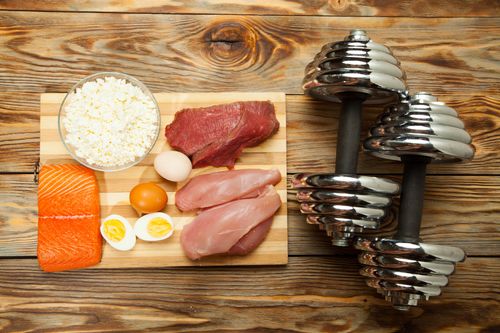
Proteins are the most important nutrient for a bodybuilder during both muscle gain and fat loss phases. Lean meats provide the body with a significant amount of protein which will promote muscle growth and maintenance.
Turkey, chicken, lean beef, pork loin, salmon and cod are examples of lean meats that are high in protein and beneficial for health.
Whole grains such as brown rice, whole grain breads, millet, quinoa, oats and granola should be added in a bodybuilder’s diet. Whole grains, being primarily carbs, provide the body with energy, improve satiety and provide key micro-nutrients that are essential for muscle growth & maintenance.
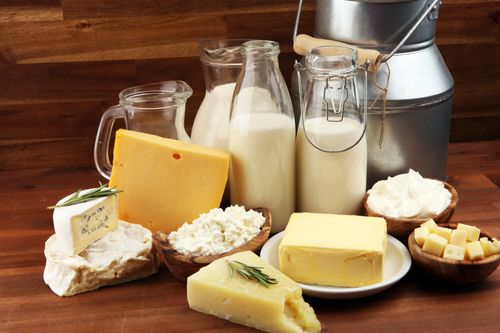
As with lean meats, dairy products are typically high in protein and therefore be included in a bodybuilder’s diet. Consuming produce like greek yogurt, cottage cheese, milk & cheeses will boost protein intake substantially.
For the bodybuilder eating a wide range of fruit and vegetables is recommended to ensure that they are consuming enough vitamins and minerals to facilitate growth and recovery.
Nuts and legumes are packed with vital micro-nutrients, proteins, and healthy fats. It is recommended that the bodybuilder eats a range of nuts and legumes to contribute towards greater muscular and general health.
There are a number of foods that can be detrimental to muscular growth. As a bodybuilder, with the goal of improving aesthetics, it is critical that these foods are restricted or avoided as much as possible as they can interfere with progress. Not only can these foods interfere with muscle growth, they can have an impact on overall health more generally.
These are foods that have been manufactured and often are high in calories and low in nutritional value. Not only can processed foods negatively impact bodybuilding progress, eating a high volume of processed foods can be detrimental to health.
Baked goods, white bread, white pasta, processed meats, ice cream, pizza, soda and candy are all examples of processed foods.
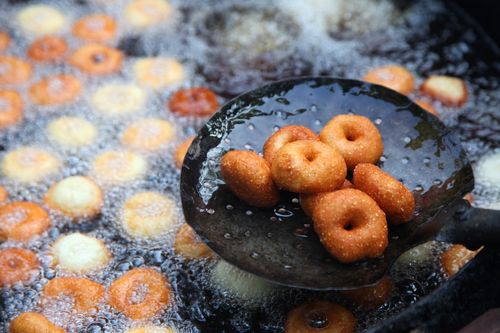
Foods that have been deep-fried tend to cause inflammation within the body and negatively impact health. Consumption of products such as french fries, chicken strips, onion rings, fried fish and mozzarella sticks should be limited.
Although technically not a food, alcohol has been found in a number of studies to inhibit muscular growth and recovery times. Therefore, drink in moderation and be aware of the negative impact alcohol may have on gains.
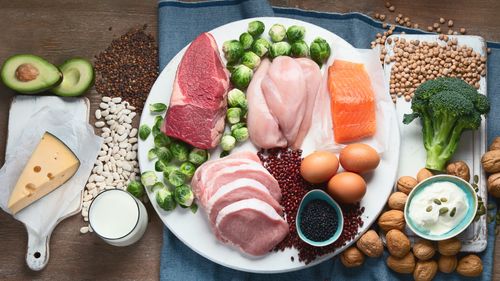
Below is a 7-day diet plan which can be used during both on and off-season. During both, the type of foods that you eat should be the same with the only difference being the quantity – this explains why quantities of each food have not been prescribed.
Be sure to calculate both calorie and macro targets prior to beginning any nutritional plan. If this is not determined, significant progress is unlikely to follow. Ascertaining these targets will give you a greater understanding of food quantities and food types to prioritize.
Remember that this is a sample plan and therefore it can be adapted to suit season, nutritional preferences and dietary requirements.
| Breakfast | Oatmeal (with milk or water) Handful of Dried Fruit and Assorted Nuts |
| Snack 1 | Boiled Eggs |
| Lunch | Chicken or Turkey Medium-sized Baked Potato Brown Rice |
| Dinner | Salmon Fillet with Sweet Chilli Sauce Brown Pasta Spinach |
| Snack 2 | Protein Shake Banana |
| Breakfast | Scrambled Egg Avocado Whole Grain Toast |
| Snack 1 | Peanut butter Apple |
| Lunch | Tuna Brown Pasta Green Salad |
| Dinner | Chicken Stir Fry Soy Sauce Peppers, Onion & Broccoli |
| Snack 2 | Protein Shake Assorted Nuts |
| Breakfast | Chicken / Turkey Sausage Egg Whole Grain Toast |
| Snack 1 | Greek Yogurt Granola |
| Lunch | Whole grain Wrap with lettuce Chicken / Turkey Black Beans |
| Dinner | Pork Tenderloin Sweet Potato Corn |
| Snack 2 | Protein Shake Berries |
| Breakfast | Oatmeal (with milk or water) Handful of Dried Fruit and Assorted Nuts |
| Snack 1 | Whole Grain Toast with Peanut Butter Orange |
| Lunch | Chicken in tomato gravy Brown Rice |
| Dinner | Beef Sirloin Boiled sweet Potato Side Salad |
| Snack 2 | Protein Shake Berries |
| Breakfast | Overnight Oats Greek Yogurt Berries |
| Snack 1 | Cottage Cheese with Fresh Berries |
| Lunch | Whole Grain Wraps Whole grain wrap with tandoori chicken and bell peppers Avocado |
| Dinner | Cod Fillet with boiled quinoa Peas |
| Snack 2 | Protein Shake Handful of Dried Fruit & Nuts |
| Breakfast | Cod fillets Boiled potatoes Boiled green peas |
| Snack 1 | Mixed seeds and pear |
| Lunch | Multigrain Roti Chicken curry Carrot salad |
| Dinner | Turkey Meatballs Whole wheat Spaghetti Spinach |
| Snack 2 | Protein Shake Melon |
| Breakfast | Poached Eggs Whole Grain Toast |
| Snack 1 | Greek Yogurt Handful of Fresh Berries & Nuts |
| Lunch | Beef curry Quinoa Broccoli |
| Dinner | Medium-sized Baked Potato Tuna Cheese Green Salad |
| Snack 2 | Protein Shake Grapes |
There is no doubt that maintaining good nutrition can be tricky for all individuals. The bodybuilding diet can be particularly challenging yet also be highly rewarding at the same time. This section will detail a number of pros and cons often linked with the bodybuilder diet.
Bodybuilding requires a large degree of commitment in terms of both training and nutrition. Those who are able to be consistent in training and nutrition will make the greatest progress.
To optimize the rate of change, it is imperative that bodybuilders consume a range of nutrient-dense foods to fulfill their calorie and macro-nutrient requirements Foods that can be detrimental, such as processed foods and alcohol, should be restricted as far as possible.

Diabetic eating doesn’t have to be devoid of all things sweet and nice. Despite the high prevalence, misunderstandings about diabetes are abounded. If you’re diabetic, you are sure to have heard of a long list of things to avoid. But diabetic eating can allow for many things sweet and nice. Here we debunk 5 common […]

Love pasta but calorie conscious and scared to make it a part of your diet? Here’s how you can prepare a healthy pasta without losing out on the taste factor. How to prepare a healthy pasta A one pot meal: Add meat, a wide range of vegetables and herbs, lentils, nuts, and some cheese, too. This […]

If you have a tendency to overeat at mealtimes, here a few tips that might help. Severe hunger pangs can sometimes cause you to overeat. So have frequent, small meals during the day to keep this under check. Next, eat slowly. Did you know that it takes about 20 minutes for your brain to register your stomach is […]

Medically reviewed by
Gautham Shankar
PHD in colouring hair in darkness

Thanks for the knowledge puts together, at least have learnt a lot in body building that the excessive eating does not matter the body but protein foods has more impact to our growth.
Hi Zainab.
Thank you for the great article.
I am a novice, amateur bodybuilder. I just wanted to know if it is detrimental for bodybuilding to eat two or three big meals separated by 4-5 hour intervals instead of the 5 meals or meals with snacks you outlined above. I struggle with the meal and snack plan as my mind gets clouded after eating and concentration becomes a mission so I prefer to eat at the start and end of my day to promote productivity.
What are your thoughts on this?
Hi Zainab, I love the content you have been posting lately.
Hi Steven, Thank you so much for taking the time to leave us this amazing review.