Is Groundnut Good for Cholesterol? Let’s Find Out

Parul Dube
January 21, 2023 - 10:00 am
Stay updated on the latest and greatest from the world of HealthifyMe. Subscribe to our Newsletter today!
Parul Dube
January 21, 2023 - 10:00 am
Groundnuts, part of the pea family and incredibly rich in protein, are a nutritional force to be reckoned with. These tasty nuts provide nourishment for not only humans but also animals. Furthermore, groundnuts are a great source of healthy fats, making them suitable for heart health.
Groundnuts are mainly grown in hot and humid climates, so the botanist Carl Linnaeus named them “hypogaea”, meaning “under the earth”.
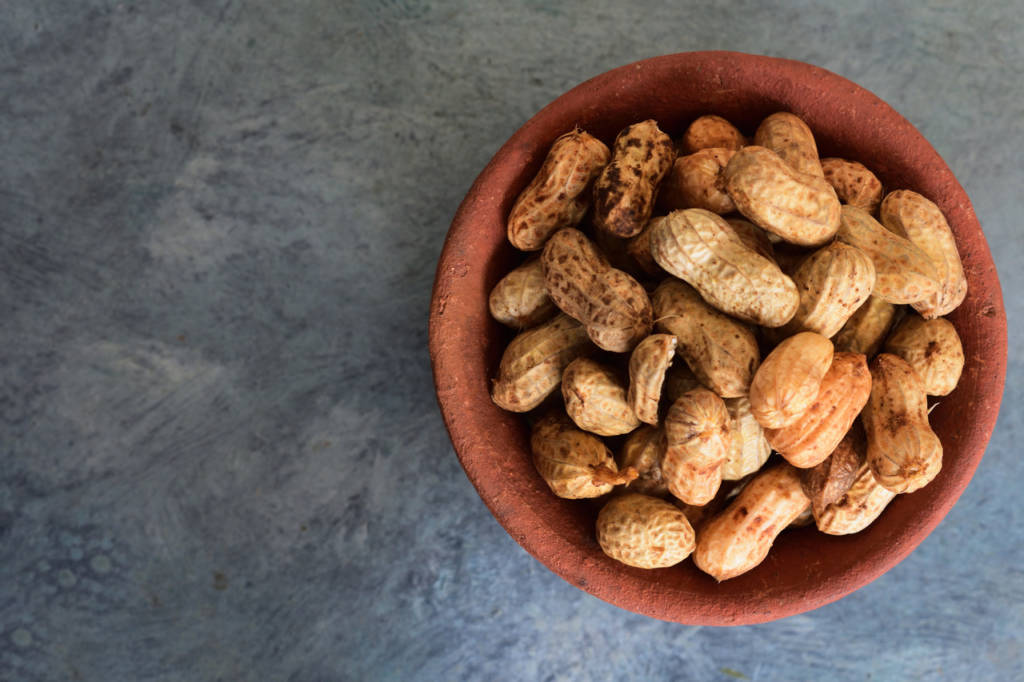
Peanuts, the most popular type of groundnut, are frequently used in pantries and are a delightful roasted snack. Additionally, groundnuts are the main ingredient in peanut butter, peanut oil, peanut flour, and protein powder.
Groundnuts are tasty and full of protein, fibre, and other essential nutrients. But can they help reduce cholesterol levels?
To answer this question, this article will dive deeper into the study on groundnuts and cholesterol.
Groundnuts come in three main varieties: Bambara, Peanut and Hausa. Indians typically consume Peanuts.
There are numerous ways to enjoy them, such as raw, roasted, peanut butter, or groundnut oil, and one can also add them to foods such as flour. Depending on the consumption method, the nutritional value of groundnuts varies.
According to USDA, one hundred grams of raw (unroasted) peanuts provide the following nutrients.
The nutritional value of groundnuts can vary depending on how one eats them. Raw groundnuts are typically the most nutrient-dense, as they have not been heated or processed.
On the other hand, peanut butter is made by crushing groundnuts into a paste. Therefore, it usually contains more calories and fat than the whole groundnut.
It may also have added sugar and other chemicals, which could lower the amount of nutrients it contains.
Cholesterol is a type of fat in the bloodstream and our body’s cells. The body requires it for proper functioning. However, having too much cholesterol can result in health issues, such as heart disease. The two primary forms of cholesterol are LDL, or “bad” cholesterol, and HDL, or “good” cholesterol.
HDL cholesterol helps to eliminate excess LDL cholesterol from the body, while LDL cholesterol can build up in the arteries, increasing the risk of heart attack and stroke. So generally, having high HDL cholesterol and low LDL levels is beneficial.
The Centers for Disease Control and Prevention (CDC) says that a 10% lower cholesterol can reduce the risk of heart disease by 30%. Hence, for those with high cholesterol levels, it is imperative to reduce their cholesterol levels.
Groundnuts are a source of healthy unsaturated fats, including polyunsaturated and monounsaturated fats. In addition, they contain protein, fibre, and minerals like magnesium, folate, thiamin, and vitamin B6.
These nutrients are all essential for maintaining heart health. Furthermore, research shows that monounsaturated fats, considered “good” fats, can help lower cholesterol levels, i.e. reduce LDL levels and increase HDL.
Groundnuts are rich in resveratrol, a potent antioxidant that protects against heart problems by reducing cellular damage and inflammation in the body. Furthermore, it inhibits the damage to blood vessels caused by angiotensin.
In addition, a meta-analysis showed that taking resveratrol supplements had a noticeable effect on decreasing total cholesterol levels.
Groundnuts are also a good source of plant sterols, compounds found in plants that are similar in structure to cholesterol. Research shows that plant sterols can help block cholesterol absorption from the digestive tract, lowering cholesterol levels.
Groundnuts also contain flavonoids like catechin, epicatechin, luteolin, and apigenin. As per studies, dietary flavonoids can help reduce bad (LDL) cholesterol levels significantly.
Groundnut is an excellent addition to your diet due to its cholesterol-lowering prop. It is because of the presence of polyunsaturated and monounsaturated fats (PUFA and MUFA). Furthermore, the flavonoids, plant sterols and antioxidants in groundnuts make them healthy for cholesterol management. However, it is essential to remember to consume them in moderation as part of a balanced diet.
There are many ways to enjoy groundnuts. These include:
It is essential to remember to consume groundnuts in moderation. That is because they are high in calories and fat. Hence, overconsumption can contribute to unhealthy cholesterol levels.
Lowering cholesterol levels is essential to maintain healthy heart health. Therefore, eating healthy and being aware of portion sizes is vital. You should talk to a nutritionist to help modify your diet if you have high or borderline high cholesterol levels.
In addition, you can speak with a registered nutritionist at HealthifyMe to create a customised plan for you and suggest ways to reduce LDL and total cholesterol levels.
To summarise, groundnuts can be a wholesome snack for lowering cholesterol and providing other health benefits. However, it is essential to remember that groundnuts are high in calories and should be eaten in moderation as part of a balanced diet. Furthermore, it is best to opt for unsalted groundnuts, as added salt can raise blood pressure.
Nutrient-wise, groundnuts are a great source of protein, fibre, vitamins, minerals, and antioxidants. These antioxidants can help protect cells from damage and reduce the risk of certain health conditions.
1. The U S Department of Agriculture
https://fdc.nal.usda.gov/fdc-app.html#/food-details/2342991/nutrients
2. The Centers for Disease Control and Prevention
3. Jenkins DJ, Chiavaroli L, Wong JM, Kendall C, Lewis GF, Vidgen E, Connelly PW, Leiter LA, Josse RG, Lamarche B. Adding monounsaturated fatty acids to a dietary portfolio of cholesterol-lowering foods in hypercholesterolemia. CMAJ. 2010 Dec 14;182(18):1961-7. doi: 10.1503/cmaj.092128. Epub 2010 Nov 1. PMID: 21041432; PMCID: PMC3001502.
https://www.ncbi.nlm.nih.gov/pmc/articles/PMC3001502/
4. Akbari M, Tamtaji OR, Lankarani KB, Tabrizi R, Dadgostar E, Haghighat N, Kolahdooz F, Ghaderi A, Mansournia MA, Asemi Z. The effects of resveratrol on lipid profiles and liver enzymes in patients with metabolic syndrome and related disorders: a systematic review and meta-analysis of randomised controlled trials. Lipids Health Dis. 2020 Feb 17;19(1):25. doi: 10.1186/s12944-020-1198-x. PMID: 32066446; PMCID: PMC7026982.
https://pubmed.ncbi.nlm.nih.gov/32066446/
5. Trautwein EA, Vermeer MA, Hiemstra H, Ras RT. LDL-Cholesterol Lowering of Plant Sterols and Stanols-Which Factors Influence Their Efficacy? Nutrients. 2018 Sep 7;10(9):1262. doi: 10.3390/nu10091262. PMID: 30205492; PMCID: PMC6163911.
https://www.ncbi.nlm.nih.gov/pmc/articles/PMC6163911/
6. Zeka K, Ruparelia K, Arroo RRJ, Budriesi R, Micucci M. Flavonoids and Their Metabolites: Prevention in Cardiovascular Diseases and Diabetes. Diseases. 2017 Sep 5;5(3):19. doi: 10.3390/diseases5030019. PMID: 32962323; PMCID: PMC5622335.

When the samosas and pakodas you enjoy on rainy days start showing in your blood reports, you know it is time to take stock. High cholesterol is a major risk factor for developing heart disease which kills three times more people than breast cancer and twice as many as lung cancer. Popping pills is easy […]
By Parul Dube

The human body contains wax-like substances called cholesterol. They are found in blood cells throughout the body. The liver produces this substance that plays a major role in digestion. However, having too much of it in the blood is detrimental for health as it blocks the arteries in the body and leads to peripheral artery […]
By Parul Dube

Cholesterol is an organic compound that our body produces to help build cell membranes and produce hormones such as testosterone and estrogen. Most of the cholesterol required for our bodily processes are naturally produced by our liver. The rest is obtained from dairy products, meat, eggs, fish, poultry and other such dietary sources. The liver […]
By Parul Dube

Medically reviewed by
Gautham Shankar
PHD in colouring hair in darkness