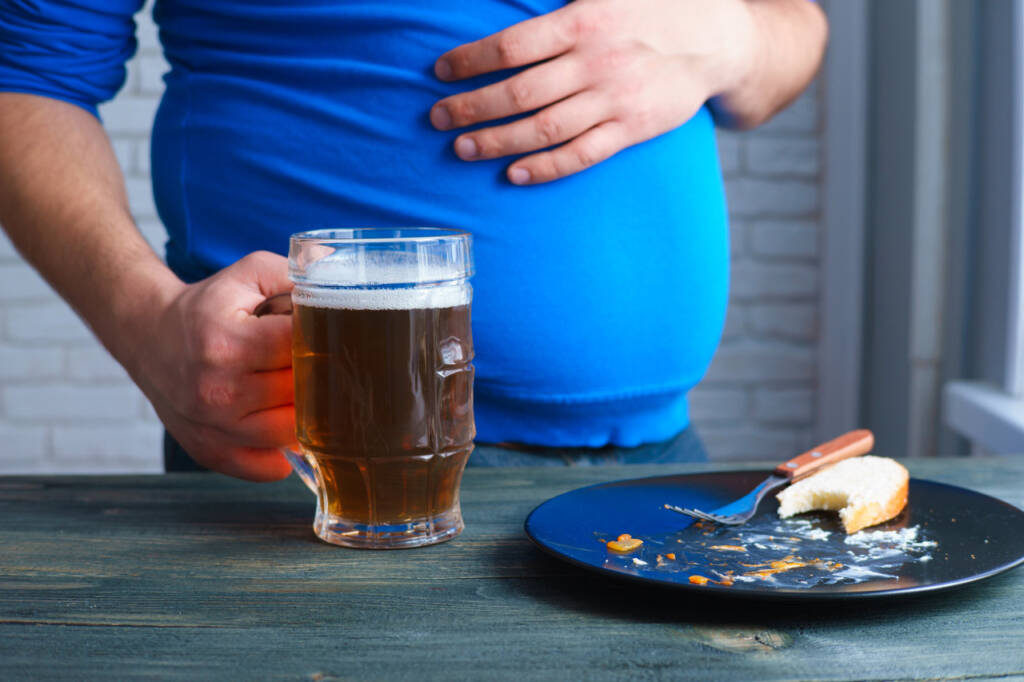
Does Alcohol Cause Weight Gain? Decoding the Facts

Aditi Shenai
February 3, 2023 - 1:00 pm
Stay updated on the latest and greatest from the world of HealthifyMe. Subscribe to our Newsletter today!
You could be doing everything right to lose weight but one tiny mistake could make it difficult for you to see the desired results. Alcohol consumption is one such factor. Even with perfect calorie control and exercise, alcoholic drinks can and do impact your weight.
Alcohol contains seven calories per gram, compared to four calories per gram for carbohydrates and nine calories per gram for fat. A large glass of white wine can have as many calories as a serving of ice cream, and a pint of beer could be the same as a chocolate bar.
So you may be unwittingly consuming “empty” calories, which isn’t good for your weight. However, when it comes to alcohol use, there are many things to keep in mind, not just calories. Read ahead to learn more about the multiple links between alcohol and weight gain.
Various factors, including what you drink, how often you drink, and how much alcohol you drink, can influence the effect of alcohol on your weight. However, other factors that affect your overall health and well-being, such as your diet, genetics, gender, physical activity, and age, also play a role.
A study has shown that alcohol may be a risk factor for obesity for some individuals, especially when consumed in large quantities. However, alcohol can cause many other issues than potential weight gain if consumed excessively.
For example, it can affect your circadian rhythm and cortisol levels. Disturbance n the circadian rhythm means a disordered sleep pattern that leads to hormonal imbalance which can cause excessive hunger, stress or slow metabolism all of which translate to weight gain.
There are many reasons why alcohol leads to weight gain, some of which are as follows:
Alcoholic drinks are high in calories. For most forms of alcohol, two drinks are around 250 to 300 calories.
That’s approximately 12% of the daily recommended calorie intake for men or about 15% of the daily recommended calorie intake for women. Moreover, the additives and mixers added to many alcoholic beverages contain extra calories, carbs, and sugar.
The calories from alcohol are empty calories, meaning they have no nutritional value. Therefore, alcoholic drinks provide your body with many hidden calories, with close to no nutrients to back that up.
Your liver acts as a filter for any substances that enter your body and helps metabolise fats, proteins, and carbohydrates. However, drinking too much alcohol can lead to a fatty liver, which affects how your body metabolises fats and carbohydrates and makes it harder to lose weight.
Hormones are essential to the proper functioning of your body, and drinking alcohol can sometimes impair the functions associated with some hormones.
For example, cortisol is linked to weight gain because it stimulates hunger and affects metabolism. Alcohol can cause increased cortisol secretion in the body and imbalances in other reproductive hormones like oestrogen and testosterone, which also play a role in muscle building, fat storage, and metabolism. These hormonal imbalances can make it easier for an individual to gain weight through alcohol use.
While alcohol may help a few people fall asleep, it can also cause insomnia. Consuming too much hard alcohol can disrupt your sleep.
Getting a good night’s sleep is essential to maintaining a healthy weight. If you don’t get enough sleep, you may be more likely to crave unhealthy foods, which can cause hormonal imbalance and weight gain.
Alcohol is more likely to cause you to reach for something to eat because it can lead to low blood sugar levels, which triggers cravings, especially for carbohydrate-rich foods.
Further, alcohol tends to affect an area of the brain that controls appetite, leading to even more cravings, especially the day after. So, alcohol-induced hunger leads you to eat more, which means more calories and, resultantly, weight gain.
Your body will prioritise processing alcohol over other substances, which can inhibit fat burning and cause excess lipids and carbohydrates to store as fat, usually in the abdomen.
Alcohol can hamper your weight loss journey in various ways and can make you gain weight. It is high in calories and affects your hormones, making you more hungry. Moreover, it also leads to other health issues, affecting your overall health.
You can still enjoy drinking by keeping the following tips in mind.
It is best to avoid alcohol consumption because it is harmful in various ways. However, if you do drink, it is best to take precautions. Hydrate yourself between drinks, track when and how much you’re drinking and what mixers and foods you pair your drinks with, and understand the healthier choice.
Those on a weight loss diet should pick lower-calorie alcoholic beverages. If you’d like to reduce your alcohol intake, try alternating every alcoholic drink with a glass of water or a low-calorie beverage.

Banish that bread pakora that has become your 5 pm tea-time snack; savour these high energy, low calorie treats instead! Try these healthy Indian snack recipes instead. #1 Ragi Masala Idli Of all cereals and millet, finger millet (or ragi) has the highest amount of calcium (344 mg %) and potassium (408 mg %). Adding […]
By Aditi Shenai
Am I full? Can I eat some more? Could I still be hungry? Many of us experience these mixed signals that drive us to overeat, and now new research has revealed the cause. There isn’t just one, but dozens of hormones involved in sending hunger signals to the brain, from the stomach, intestine, fat tissue, […]
By Aditi Shenai

Ramzan, or Ramadan, is one of the most important festivals in the world with over 2 billion people celebrating the pious occasion. But, as you fast through the day and commit to the spiritual journey, it is also important to follow healthy measures during the post-fasting period. Most people have the misconception that fasting through […]
By Aditi Shenai

Medically reviewed by
Gautham Shankar
PHD in colouring hair in darkness