Banana Stems – Nutrition Facts, Benefits, & Side Effects

Mehak Shah
September 19, 2022 - 2:42 pm
Stay updated on the latest and greatest from the world of HealthifyMe. Subscribe to our Newsletter today!
Mehak Shah
September 19, 2022 - 2:42 pm
From our childhood days, we have heard that the consumption of bananas is excellent for our health. It is full of micronutrients and macronutrients, which impart numerous health benefits. Every part of the banana tree, like the fruit, leaf, and stem, is packed with multiple health benefits. In addition, almost every part of the banana tree has commercial applications.
Banana belongs to the Musaceae family in the genus Musa. The Fe‘i banana, which belongs to the Australimusa sub-section of the Musa genus, is cultivated mainly for its fruit. The Fe‘i bananas are categorised by straight bunches, pink-red to purple sap, and deep yellow or orange coloured fruit pulp. Banana and plantain are a group of large perennial herbs that can grow up to 20 feet.
People cultivate bananas in the tropical region, with India being the largest producer with an average annual output of 14.2 million tonnes. Other leading producers of bananas include Ecuador, the Philippines, Brazil, Mexico, China, and Costarica. People also use the fruit, leaves, stem (also known as ‘false stem’), flowers, and banana tree roots as medicine. In North America, most of the accessible bananas are from one precise variety. However, many types of bananas exist around the world.
Banana is a wholesome fruit, and you can use almost every part of the tree for its medicinal value. For example, it helps maintain low potassium levels in the blood (hypokalaemia), constipation, and diarrhoea. People also use bananas to treat diabetes, high cholesterol, and many other conditions, but no detailed scientific research supports most of these uses.
Banana fruit contains chemicals and carbohydrates. Some of these carbohydrates work as fibres, which play an essential role in regulating the gastrointestinal system. The chemicals function as antioxidants which play a role in reducing swelling and fighting free radicals. Bananas also contain potassium, vitamins, and several other minerals.
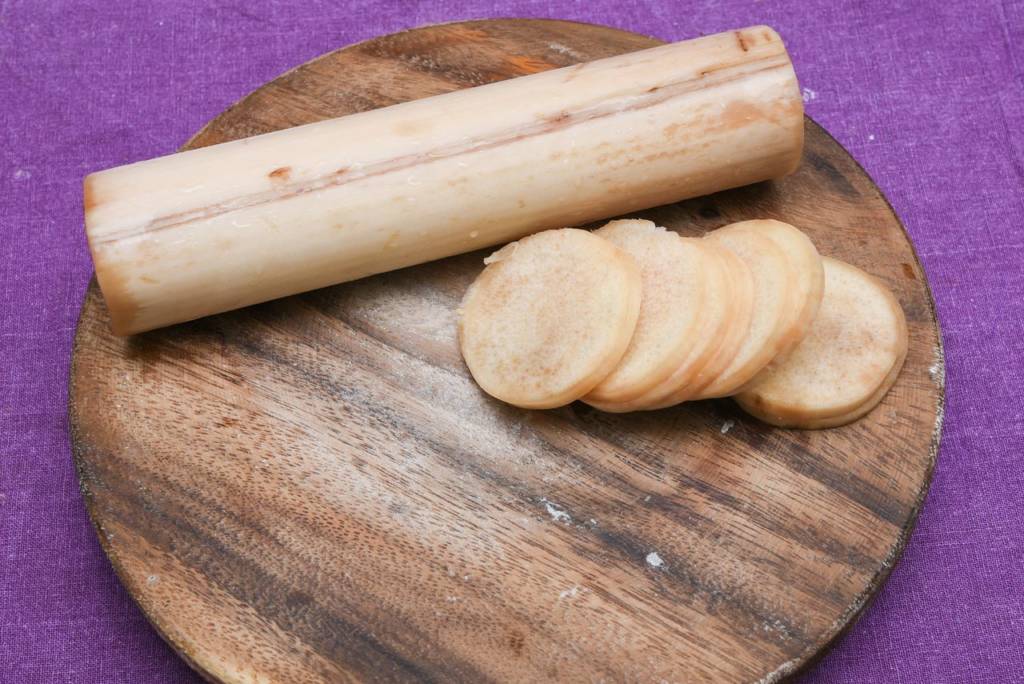
The banana stem is not like other plant stems because the flower stalk of the banana plant is known as the banana stem. The thick stalks rise from the soil, thus forming the spine of the herbaceous plant. The banana stem has a crunchy surface and possesses a mild flavour when consumed as a food product. But, on the other hand, it is sweet and gives a bitter aftertaste. Therefore, it is fair to say that the stalk is the stem of the banana plant.
The banana stalk harvests one colossal flower cluster and then dies. The stalk is generally cut off from the plant when the bananas are plump and subjected to the ripening process. Therefore, people consume this stalk as the banana stem.
The banana stem is loaded with an ample amount of fibre and is thus known to benefit in preventing constipation and ulcers in the long run.
The banana stem also contains a substantial amount of vitamins B6 and potassium. Hence, patients suffering from anaemia and diabetes are advised to include this food product in their diet regularly. Some of the other benefits of the banana stem are:
The prevalence of diabetes is witnessing rapid growth among low and middle-income countries compared to high-income countries. Rising cases of diabetes worldwide are primarily due to several factors such as obesity, sedentary & unhealthy lifestyle, and genetic history.
Vitamin B6 is a cofactor involved in many reactions responsible for modulating various functionalities. Therefore, deficiency of it often leads to several implications like Parkinson’s, diabetes, autism, cancer, and many more.
Studies linking diabetes and vitamin B6 have correlated both complications and effectiveness. Studies in Drosophila have indicated that vitamin B6 deficiency may lead to diabetes. Hence, banana stems, a rich source of vitamin B6, are believed to produce effective results in combating diabetes. Furthermore, vitamin B6 in the stem supports the production of haemoglobin and insulin.
People also use the stem for the treatment of hyperglycaemia. Lectin present in the banana stem stimulates insulin-like enzymes, which regulate the growth of fatty cells. Moreover, bananas stems are highly suitable for consumption among diabetes patients, owing to their low glycemic index.
The juice of the banana stem flushes out toxins from the body. Therefore, it is also consumed as a drink by many. It has diuretic properties and positively affects the digestive system. It also has a lot of good fibre, which plays a vital role in maintaining optimum gut health.
Banana stem juice regulates the acidic levels in the human body and balances them. As a result, it helps to reduce heartburn and discomfort in the digestive system.
Banana stem juice is very beneficial in the weight loss process. The high content of fibre curbs hunger pangs and cravings, thereby reducing food intake and contributing to weight loss. The fibre also facilitates the release of sugar and fats into the body’s cells. If consumed as salad, the raw stem pieces help reduce obesity by cutting down on fat.
Currently, doctors often recommend including banana stem in the diet for patients who suffer from gall bladder stones. You can include banana stem in the diet as a beverage or part of a meal.
The stem juice is a decent diuretic drink and helps oust small kidney stones. If mixed with cardamom, this juice soothes the bladder and provides relief against cystitis. Cystitis is a form of urinary tract infection (UTI) that disturbs the bladder. It is more common among women. Cystitis generally heals by itself. However, in extreme cases, you would require antibiotics for its treatment.
According to WHO, in 2019, the global prevalence of anaemia stood at an overwhelming 29.9% among women in the reproductive age category or aged 15-49 years. Whereas anaemia’s prevalence among children aged between 6-and 59 months stood at 39.8%.
Banana stems are highly recommended in the treatment of anaemia by healthcare professionals. They are rich in vitamin B6 and iron, both known to promote haemoglobin levels in the blood.
Subsequently, the plantain stem is full of fibre, which can effectively provide relief in constipation. Therefore, consumption in the form of juice for treating constipation is exceptionally beneficial. However, not straining the juice is recommended by experts to maintain optimal levels of fibre in the drink.
According to reports published by WHO, one-third of ischaemic heart disease cases globally are due to high cholesterol levels. In addition, high cholesterol levels are estimated to cause roughly 2.6 million fatal episodes yearly. Between 2015 and 2018, approximately 12% of American adults showed cholesterol levels higher than 240 mg/dL, says CDC.
The banana stem can also help efficiently manage cholesterol levels, among many benefits. It is a rich source of vitamin iron & B6, which play an essential role in increasing haemoglobin count and reducing low-density lipoproteins (LDL) cholesterol levels.
Hypertension or high blood pressure is when the blood pressure against the arteries’ walls is abnormally high. If left unadministered, hypertension increases the chances of stroke. According to CDC, approximately half of the entire American adult population, i.e., ~47%, suffer from hypertension.
Banana stems are rich in potassium, a mineral best known for combating fluctuations in blood pressure. Hence, regular consumption of banana stems can help manage high blood pressure effectively and reduces the risk of cardiovascular disorders.
Studies have found that Urinary tract infection (UTI) is one of the most common infections that affect women worldwide. UTI often leads to vaginal infections, and it majorly results from pathogens that originate in the digestive tract.
Banana stem juice possesses diuretic properties. Thus, it aids the body in flushing away toxins and purifying the urinary tract. Therefore, it is best to consume banana stem juice at least three times a week to evade the chances of urinary tract infections.
As per Ayurveda, all components of the banana tree have great medicinal benefits against a wide range of conditions. People refer to it by synonyms like Kadali, Vaarnaa, Mocha, Ambusara, and Anshumatiphala. Few of the many uses of bananas in Ayurveda include:
Although banana stem does not have significant side effects, some possible side effects are allergy, stomach ache, vomiting, or harm to the liver & kidneys. However, it depends on the person’s medical history and the amount of banana stem consumed. You should exercise moderation while eating or drinking in any form. A skin allergy can also be a potential side effect.
In such situations, it is of utmost importance that the person consults a doctor, a medical expert, a nutritionist, or a dietician. Ignoring the symptoms mentioned above can lead to far-reaching health problems.
Many people avoid incorporating banana stem as it takes time to clean and cut the banana stem. But given that it is helpful in many ways, there are easy methods to avoid time wastage. Once cleaned and cut, they can be soaked in buttermilk and stored in the fridge for days. Then, as per the requirement, you can use it to make juice for consumption. However, with time, you should change buttermilk.
In Southern Thailand, people usually add a finely chopped banana stem to a sweet and sour vegetable soup or a curry. Therefore, you can use banana stems as an ingredient in cooking meals.
In West Bengal, people fry the banana stem and incorporate it into meals. Being a tropical region, people in South India use banana stems to curate numerous recipes. A popular recipe is Vazhaithandu Pachadi, a form of raita made with banana stems. It is simple to make and is highly beneficial for health, especially during summers.
The banana stem is a herbaceous and non-woody part of the banana tree. People know it by many names across different parts of India and the world. It is a well-established fact that the banana stem is full of flavour and nutrition. People, especially in India, devour this part of the plant.
While in other parts of the world, people use it in varied ways in a meal. Being a rich source of nutrients, it finds a place in every household for its affordability, medicinal benefits, and convenience. Capacity & tolerance towards food varies widely from individual to individual. Hence it is strictly recommended to consult a professional in case of potential side effects post-consumption.
A. Once cleaned and cut, you can soak them in buttermilk and store them in the fridge for days. Then, you can use it as per your requirement. For example, you can use it to make juice for consumption. Changing the buttermilk as per its sourness should be kept in mind.
A. Banana stems constitute two natural layers—the hard inner layer is edible, and you must discard a porous outer layer. The process of banana fibre extraction is simple. First, you should peel off the outer covers of the banana stem. Next, flatten the inner layers, and strip off the fibres manually or through machines for commercial purposes.
A. Wrapping the banana stems is a great way to keep them fresh. You should do it to stop the release of ethylene gas from the stems.
A. When bananas come in contact with ethylene gas, their acids break down. Soon it becomes softer, and the green chlorophyll pigments in the fruit break down. It turns into a yellow hue colour, similar to brown.
A. The inside part of the fibrous stalk in a banana stem is the edible portion. However, you will have to remove the rough outer layers to reveal the white or yellowish-green stem.
A. The banana fruit essentially develops from the banana flower; this process is flower development. The development of the flower occurs deep within the plant’s stem, which hides under the leaves’ bases. You cannot see the first few stages of flower development until you cut the banana plant. Hence, the stem only appears above the leaves once the flower completes its growing phase.
A. Vitamin B6 in the stem supports the production of haemoglobin and insulin. Therefore, the stem helps combat hyperglycaemia. Moreover, lectin present in the banana stem stimulates insulin-like enzymes, which regulate the growth of fatty cells. Thus, the consumption of banana stem is considered effective in protecting against diabetes.
A. You can use the fresh stems raw. However, it is not so tender when the stem is a day older. Hence you will have to cook or fry it to consume it.
A. Currently, doctors often recommend including banana stems in the diet for patients who suffer from gallbladder stones. Including banana stem in the diet at least once weekly as a beverage or meal is highly beneficial. The stem juice acts as a decent diuretic drink and helps out small kidney stones.
A. Drinking a glass of banana stem juice in the morning at least three times a week contributes massively to your health and offers numerous health benefits. However, this depends on individual needs, issues, and medical history. Hence, it is best to consult a doctor to avoid potential side effects.

Moong dal is one of the most popular vegetarian superfoods. It is rich in high-quality proteins and other essential nutrients. The high protein content contributes to building and repairing tissues and building muscles, bones, cartilage, blood, and skin. A 100 g serving of cooked moong dal can provide you with about 6 g protein. It […]
By Mehak Shah

Fish is a great source of heart-healthy lean protein. Dining on one or two servings of fish as your protein every week can lower the risk of heart attack by almost one-third. That’s because it contains heart-healthy omega-3 fatty acids, which lower triglyceride levels as well as help reduce inflammation throughout the body and support […]
By Mehak Shah

It’s a pale liquid that appears deceptively weak, given it packs a real punch, kicking your fat-fighting metabolism into high gear. And while research has shown that exercisers who drink green tea lose twice as much weight as those who don’t, several questions about its potency remain unanswered – like are flavoured green teas as […]
By Mehak Shah

Medically reviewed by
Gautham Shankar
PHD in colouring hair in darkness