Slay Weight-loss Demons by opting for Good Fat over Bad

Dr. Priyanka Marakini
October 10, 2016 - 3:41 pm
Stay updated on the latest and greatest from the world of HealthifyMe. Subscribe to our Newsletter today!
Dr. Priyanka Marakini
October 10, 2016 - 3:41 pm
On Dussehra, the day Ram vanquished Raavan, we celebrate the victory of good over evil. Reason enough for the health conscious to allow good choices to outweigh the bad in their diet. We suggest you begin with the most fitting win of all – embrace good fat, eliminate bad fat and score an essential victory for your health.

The general perception is that fats are bad. But the truth is that some fats are good for you, while others are best avoided.
Fat is a rich source of energy – 1 gram provides 37 kJ or 9 kcal. The American Heart Association (AHA) maintains that dietary fats are essential to “give your body energy, support cell growth, protect your organs and keep your body warm.”
All fat is made up of building blocks called fatty acids, and are differentiated based on their chemical structure. Good fats – unsaturated, monosaturated and polysaturated – provide the body with energy as well as essential fatty acids and fat-soluble vitamins.
Bad fats — saturated and trans fats — can lift the risk of Type 2 diabetes, certain cancers and heart disease.
Experts say fat intake should not exceed 35% of the total daily energy intake from food; saturated fat should not exceed 11% of total energy intake from food. Most of us consume close to the requisite amount but the problem is, we are not always aware of the amount of saturated fat that we are consuming or how particular foods contribute towards the daily intake.
Which is why we’re breaking it down for you:

They occur naturally in many foods, mainly meat and dairy products. This includes butter, lard, pork, poultry with skin, coconut oil and palm oil.
What they do: Saturated fats are linked to “bad cholesterol” and can increase risk of heart disease and Type 2 diabetes. Replacing foods high in saturated fat with healthier options can lead to a drop in blood cholesterol levels and improve lipid profiles.
The verdict: Experts say that men should consume no more than 30 gm saturated fat a day while women should stick to the 20 gm limit.
Most deep-fried food prepared in commercial fryers at restaurants and fast food outlets contains trans fats, which are created when oil is re-used. We also end up creating and using trans fats when we fry and reuse oil at home. The oil used to make samosas, chips or pakodas is often rich in trans fats. It can also be found in fried foods like doughnuts and baked goods including cakes, biscuits, frozen pizza, cookies and margarine.
What they do: Trans fats raise the LDL cholesterol levels and lower your HDL cholesterol, increasing your risk of developing heart disease, stroke and Type 2 diabetes.
The verdict: Avoid trans fats as much as you can. The American Heart Association recommends that no more than 1% of your daily calories come from trans fats – on an 1,800-calorie diet, that should be only 18 calories. A bag of potato chips – about 50 gm – has about 270 calories! So think before you eat.

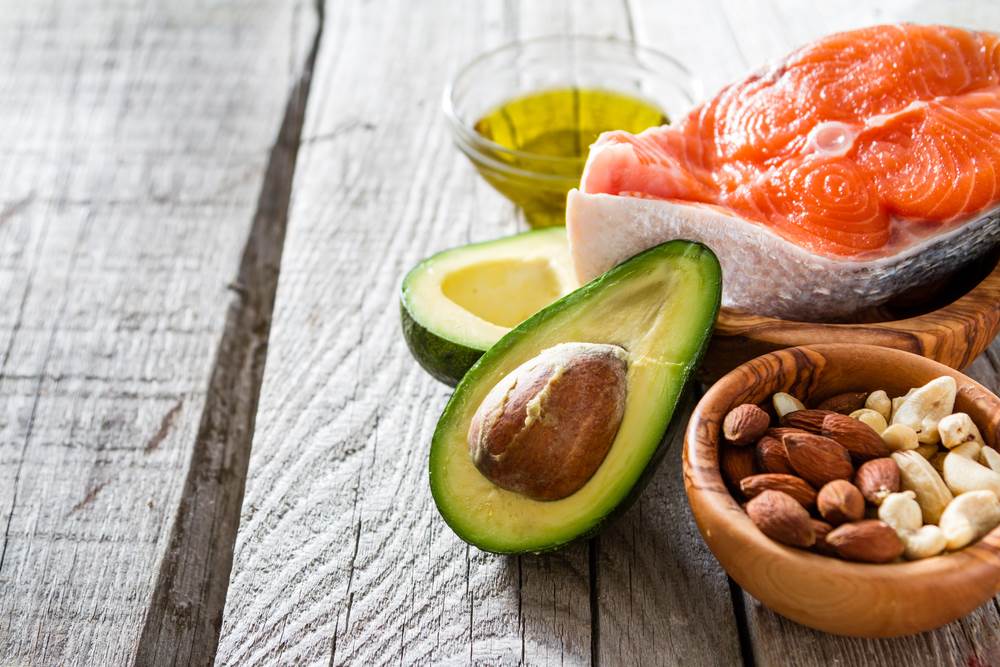
Foods that contain unsaturated fats include nuts, avocado, and oils such as soybean, canola and olive.
What they do: When used to replace saturated fat, unsaturated fat helps lower cholesterol, which is one of the major risk factors of heart disease.
The verdict: Go for more. Increase your intake of unsaturated fat by replacing solid sources such as butter with olive and vegetable-based oils and red meat with seafood.
They can be found in plant-based liquid oils such as olive, canola, peanut and sesame. They are also present in peanut butter, avocados, nuts and seeds.
What they do: They can reduce LDL cholesterol levels, lower the risk for heart disease, stroke and breast cancer. Diets high in monounsaturated fats can also lead to reduced belly fat.
The verdict: Go for more. Opt for vegetable-based oils, replace butter with peanut butter, add olives to salads and sprinkle a handful of nuts on your salad.
They are found in fatty fish such as salmon, trout, herring, sardine, mackerel, nuts, seeds and vegetable oils such as corn, safflower oil and olive oil.
What they do: Polyunsaturated fats can help reduce bad cholesterol levels, lowering your risk of heart disease and stroke. Apart from contributing vitamin E to the diet, they also provide nutrients to help develop and maintain the body’s cells. Oils rich in polyunsaturated fats also provide other essential fats such as Omega-6 and Omega-3 fatty acids, which are vital for many functions the body. These fatty acids fight inflammation, help control blood clotting, and lower blood pressure and triglycerides.
The verdict: Go for more. Order a grilled fish instead of a meat curry, rotate your oils regularly and add some nuts to your bowl of oats.
To win the weight battle, you’ll need help planning your diet. Get in touch with our experts

Diabetic eating doesn’t have to be devoid of all things sweet and nice. Despite the high prevalence, misunderstandings about diabetes are abounded. If you’re diabetic, you are sure to have heard of a long list of things to avoid. But diabetic eating can allow for many things sweet and nice. Here we debunk 5 common […]

Love pasta but calorie conscious and scared to make it a part of your diet? Here’s how you can prepare a healthy pasta without losing out on the taste factor. How to prepare a healthy pasta A one pot meal: Add meat, a wide range of vegetables and herbs, lentils, nuts, and some cheese, too. This […]

If you have a tendency to overeat at mealtimes, here a few tips that might help. Severe hunger pangs can sometimes cause you to overeat. So have frequent, small meals during the day to keep this under check. Next, eat slowly. Did you know that it takes about 20 minutes for your brain to register your stomach is […]

Medically reviewed by
Gautham Shankar
PHD in colouring hair in darkness