Squat Like a Pro: 7 Common Squat Mistakes you Should Avoid

Roshini Gilbert
October 26, 2016 - 7:10 pm

Stay updated on the latest and greatest from the world of HealthifyMe. Subscribe to our Newsletter today!
Roshini Gilbert
October 26, 2016 - 7:10 pm
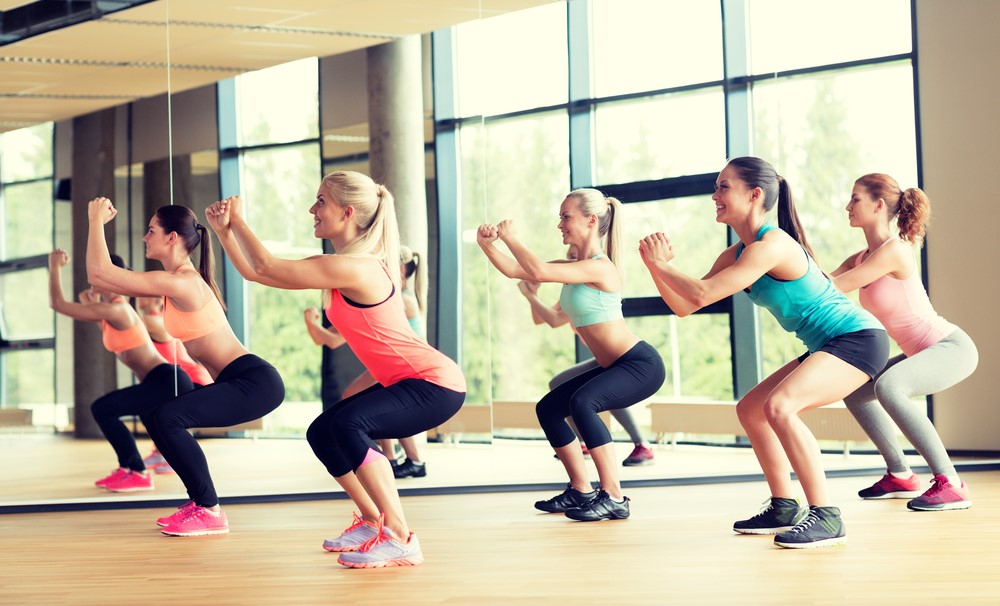
Whether you intend to lose weight, or build endurance and power/strength for a sport, or merely try and get fit, squats are a basic exercise for any fitness regimen. Its popularity can be attributed to two main factors: it’s an easy workout which can be performed by everyone from beginners to fitness pros, and it is among the best exercises for developing lower body fitness.
Squats benefit a whole lot of muscles including the glutes, hamstrings, quadriceps, calves and erector spinae muscles. It also contributes to making the knee and ankle joints strong and healthy thus helping prevent aches and pains in advanced age. Some fitness instructors also use it as a tool to gauge strength and flexibility before drawing up a workout regimen for an individual.
Squats can be done both with and without weights; while you could start with the latter, it’s recommended that you graduate to weights as your training progresses contingent upon your fitness goals and physical condition.
Despite the ease and numerous benefits of squats, there are serious risks associated with it when not performed correctly. Flawed technique could result into a host of chronic injuries including knee and spine damage. This makes it imperative to follow the correct technique for squats irrespective of whether you’re a beginner or a pro.

Proper warm up is vital before doing squats and the RAMP technique is your best choice. RAMP stands for:
R: Raise body temperature and heart rate.
A: Activate key muscle groups.
M: Mobilize joints.
P: Potentiate—perform the exercise at 10% intensity for a brief span as preparation for the actual exercise.
The RAMP technique incorporates activities such as treadmill running, apart from activation and mobilization of specific joints and muscle groups which will be used during the exercise. Especially in the case of squats, ensure that all the joints are mobilized instead of a selected few. Potentiation as the final step involves preparing the body for the actual exercise through low intensity simulation of the actual workout.
A common mistake people make while doing squats is to begin the movement from the knee rather than the hip. This generates maximum strain on the wrong muscles (the quadriceps instead of the glutes) while also increasing the risk of knee injury. Performing squats under the supervision of a qualified fitness trainer is the best way to avoid this mistake, but observing yourself do the exercise either in front of a mirror or on video and making notes could also allow you to discern whether your technique is correct or needs modification.

While doing a squat, ensure that you stand in such a way that your knees are always behind your toes. Knees crossing the toes even when you’re bending down is another common mistake people tend to make which could result in injuries to the knee and spine.
Not completing the range of motion while doing a squat prevents you from reaping the full benefits of the exercise and also increases injury risk. Ensure that the buttocks are parallel to the ground during the downward movement and don’t hesitate to descend further if your body permits. The extent of the downward movement usually depends on individual physical conditions (abnormal femur length or a problem with the femur head angle could be restraining factors that prevent the full range of motion but such cases are a rarity), but most people are generally able to complete the motion with a little bit of effort and commitment.

Having a posterior tilt (also known as butt wink) could result in damage to the spine. The best way to avoid this is to increase the flexibility of the hamstring muscles, which is the reason behind posterior tilt in 90% of the cases.
Instead, push out with your feet laterally while performing the exercise so that they mimic the action of tearing the carpet apart supposing you were standing on one. This is a useful technique if you are using weights which augments your body strength and allows you to do some heavy lifting.
The general rule of breathing during exercise is to exhale during concentric movements (shortening of muscles) and inhale during eccentric movements (lengthening of muscles). During squats, this would imply breathing in during the downward movement and breathing out while rising. But a slight modification is made for squats with heavy weights where it is recommended that you hold your breath (with closed glottis) while rising, exhaling only when you’re fully upright. This is known as the Valsalva manoeuvre whose benefits include core stability and protection of the spine while dealing with heavy loads.
The Valsalva manoeuvre, however, is not recommended for people with high blood pressure since holding your breath leads to a spike in pressure. Also, using a lumbar belt is recommended if you’re using very heavy weights.
Need help with your exercise moves? Get in touch with our experts
While working out can be excruciating, don’t let baseless facts affect your training. Here are some common myths about exercising, that you can kiss goodbye. MYTH 1: It is too late to lose weight The truth: Whether your 40 or 70, it is never too late to start exercising. Weight loss, stamina increase and strength […]

Your days are packed, and exercise never makes it to your to-do list. But exercise is necessary. Learn how to squeeze in exercise into your busy day. MULTITASK If a chunk of your day goes in listening into conference calls or sitting in at meetings, why not get some exercise while you’re at it: While […]
Exercising does good to your heart, mind and body, but is not always the best thing to do. There are times when resting your body is better than a workout-induced endorphin high. Read on to find out when it’s best to avoid exercise. Fever: Fever is a sign that you’re body is fighting infection. At such a […]

Medically reviewed by
Gautham Shankar
PHD in colouring hair in darkness